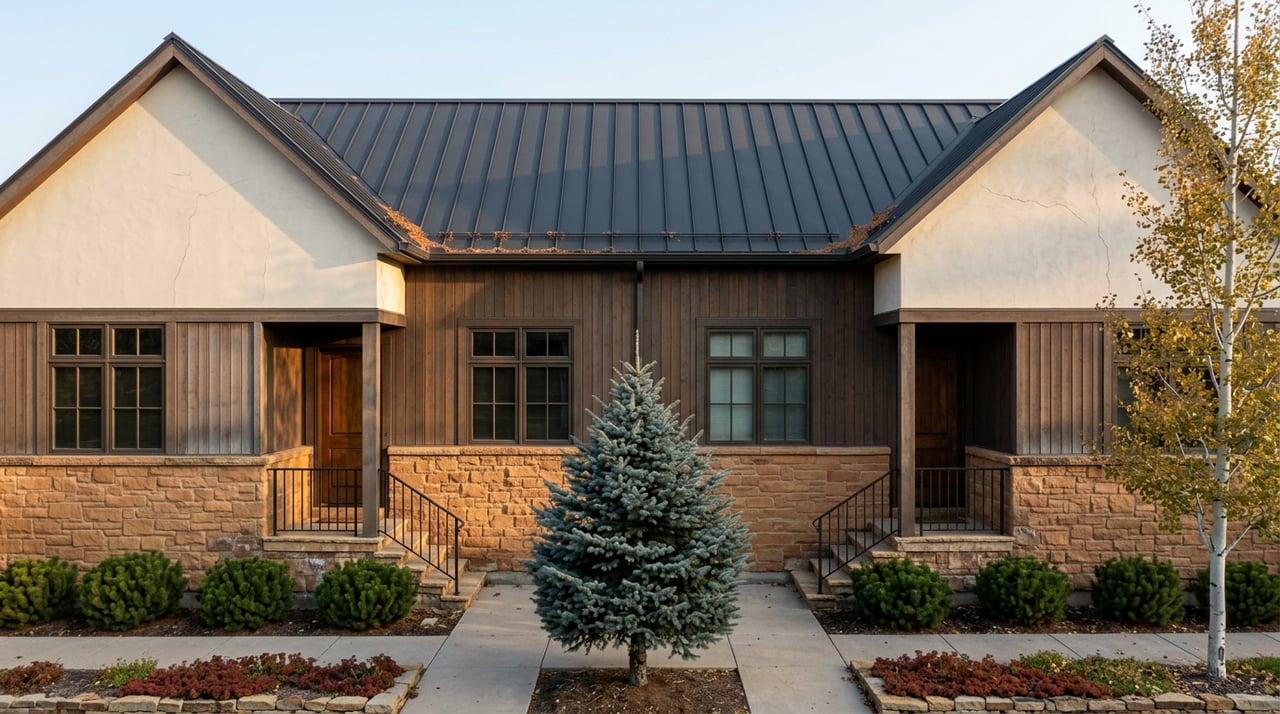
A buyer finds a two-bedroom condo at Aspenwood, tucked a few blocks off Highway 24, listed well under $300,000. It looks like the easy way into Woodland Park after months of watching single-family homes clear $600,000. Then the lender comes back asking for the HOA's reserve study, the percentage of the budget going into reserves, and the deductible on the master insurance policy. None of that came up when a friend bought a detached house in Paradise Estates last spring. The condo buyer isn't imagining a double standard. There is one, and it started this year.
Woodland Park's home values get reported as a single number, usually somewhere in the $500,000s to $600,000s depending on which portal you check and which 30-day window it happens to catch. That number describes the town's dominant housing stock: wooded lots, detached homes, mostly no HOA at all. It says almost nothing about the smaller slice of the market, condos and townhomes, where a new set of national lending rules landed hard in 2026 and changed what "affordable" actually means to close on.
The number everyone quotes isn't wrong, it's just not about the cheap homes
Ask three sources for Woodland Park's median home price this year and you'll get three different answers depending on the day. In the same general window, one tracker put the median sale price at $495,000, while another measuring the trailing 30 days put it at $605,000, up nearly 13 percent year over year. That's not a data error. It's what happens in a market where only 19 to 21 homes sell in a typical month. A handful of high-end closings or a run of starter homes can swing the median by six figures without the underlying market actually moving.
That volatility matters for context, but it's also a distraction from the real story. Every one of those medians is built almost entirely from detached, single-family sales, because that's what Woodland Park mostly is. Local buyer's agents describe most properties in town as having no HOA whatsoever, with covenant-controlled subdivisions and condo or townhome complexes making up a distinctly smaller share of the inventory. The median headline is a story about ranch homes, log cabins, and custom builds on half-acre lots. It was never describing the units at Aspenwood, Eagle Pines, Paradise Pines, or Westwood.
The smaller, cheaper slice of town
That condo and townhome slice is genuinely the affordability play in Woodland Park right now. In the past 30 days, condos listed in town carried a median asking price around $250,000, less than half the detached-home median, with days on market running in the low 90s. Recent monthly counts showed roughly 8 condos, 18 townhomes, and a handful of multi-family units for sale at any given time, a fraction of the total single-family inventory but the only realistic entry point for a buyer who isn't chasing acreage or a six-figure down payment.
That's exactly the segment that changed under everyone's feet this year.
What changed for condo buyers in 2026
On March 18, 2026, Fannie Mae and Freddie Mac released coordinated updates to how conventional condo loans get underwritten nationwide, covering project reviews, HOA reserve requirements, and insurance standards. None of it is unique to Colorado, but a small, older condo stock like Woodland Park's feels it more than a market full of new construction.
| What Changed | Before 2026 | Now | Effective |
|---|---|---|---|
| Project review | Limited review allowed for many established buildings | Full financial review required for nearly all conventional condo loans | August 3, 2026 |
| HOA reserve minimum | 10% of budgeted assessment income | 15% of budgeted assessment income | Phases in by January 4, 2027 |
| Per-unit insurance deductible | No standardized cap | Capped at $50,000 on the master policy | July 1, 2026 |
Two of those three changes are already in force. The deductible cap took effect July 1. The elimination of limited reviews took effect August 3, which means as of this month, lenders are required to pull the full financial and insurance file on nearly every conventional condo loan in the country, including the small complexes scattered through Woodland Park. The reserve requirement gives HOAs until January 4, 2027 to get to 15 percent, but because full reviews are already mandatory, lenders are checking that number now, months ahead of the compliance deadline, and flagging buildings that aren't there yet.
The Colorado Division of Insurance has been tracking a related, harder problem behind these federal changes: insurers pulling back from condo and HOA coverage altogether in wildfire-adjacent communities, pushing deductibles higher and limiting who will write a policy at all. Woodland Park, ringed by Pike National Forest, sits squarely in that conversation.
Why this bites harder here than it looks
None of this shows up in the median home price. A condo building that fails the new reserve threshold doesn't get counted differently in the town's sale statistics, it just becomes harder to finance conventionally, which pushes some buyers toward portfolio loans with larger down payments and higher rates, and pushes others out of that unit entirely. The effect is invisible in the aggregate number and entirely visible to the one buyer standing in front of a lender's condo questionnaire.
That's the part worth sitting with if you're comparing Woodland Park to a neighboring town on price alone. The headline median describes a market most buyers here aren't actually shopping in. The segment that functions as the real affordability entry point, the condos and townhomes, is the one segment currently absorbing a nationwide lending shift that has nothing to do with Teller County and everything to do with how that unit gets appraised, insured, and approved.
Local lenders and title professionals are already adjusting. A continuing education session on condo and HOA lending, insurance, and HO-6 coverage is on the calendar this week at a Woodland Park title office, aimed squarely at agents who need to understand these questions before they show a client a condo listing. That's not routine. It's a direct response to a rule change that's six weeks old.
Questions worth asking before you write an offer
If a condo or townhome in Woodland Park is on your list, ask for these before you get emotionally attached to the unit:
- What percentage of the HOA's annual budget currently goes to reserves, and how does that compare to the 15 percent threshold
- What is the per-unit deductible on the master insurance policy, and has it changed in the last year
- Has the association had a full lender project review since August 2026, and what came back
- Is there any pending litigation involving the HOA
- What percentage of units in the building are owner-occupied versus rented, since investor concentration affects warrantability
A seller or listing agent who can answer all five without hesitation has already done the work that used to be optional and is now standard.
If you're the one selling
If you own a condo or townhome in one of Woodland Park's smaller complexes, the smart move is to get ahead of the questions rather than let a buyer's lender surface them mid-contract. Ask your HOA board or management company for the current reserve percentage and the most recent reserve study. If the association is below 15 percent, find out whether there's a funding plan in place before January 2027, because a building that's still short when a buyer's loan officer runs the numbers can stall or kill a financing approval that has nothing to do with your unit's condition or your price.
A few questions worth settling early
Does this affect single-family homes in Woodland Park too? No. These rules apply specifically to conventional condo and co-op loans. Most Woodland Park properties are detached single-family homes without an HOA, and they're not subject to project review requirements at all.
Can I still get a loan on a condo if the HOA doesn't meet the new reserve threshold? Often yes, but not through a standard conventional loan. Buyers typically need a portfolio loan, which usually comes with a larger down payment and a higher rate than a conventional mortgage would carry.
Does paying cash sidestep all of this? It does. A cash buyer skips lender underwriting entirely, which is one reason cash offers on undercapitalized condo buildings can carry real negotiating leverage right now.
The median price will keep telling you about Woodland Park's cabins and custom builds. If your search actually depends on the condo and townhome segment, the real number to ask about isn't the list price, it's the reserve percentage. Ruthie Grainger and the team at Gold District Realty walk buyers and sellers through exactly those HOA documents before an offer goes in, not after. If you're weighing a condo purchase against a detached home anywhere in the Pikes Peak corridor, start with a clear read on what your current property is worth and where it fits. Get an Instant Property Valuation and we'll help you sort the headline number from the one that actually matters for your transaction.
