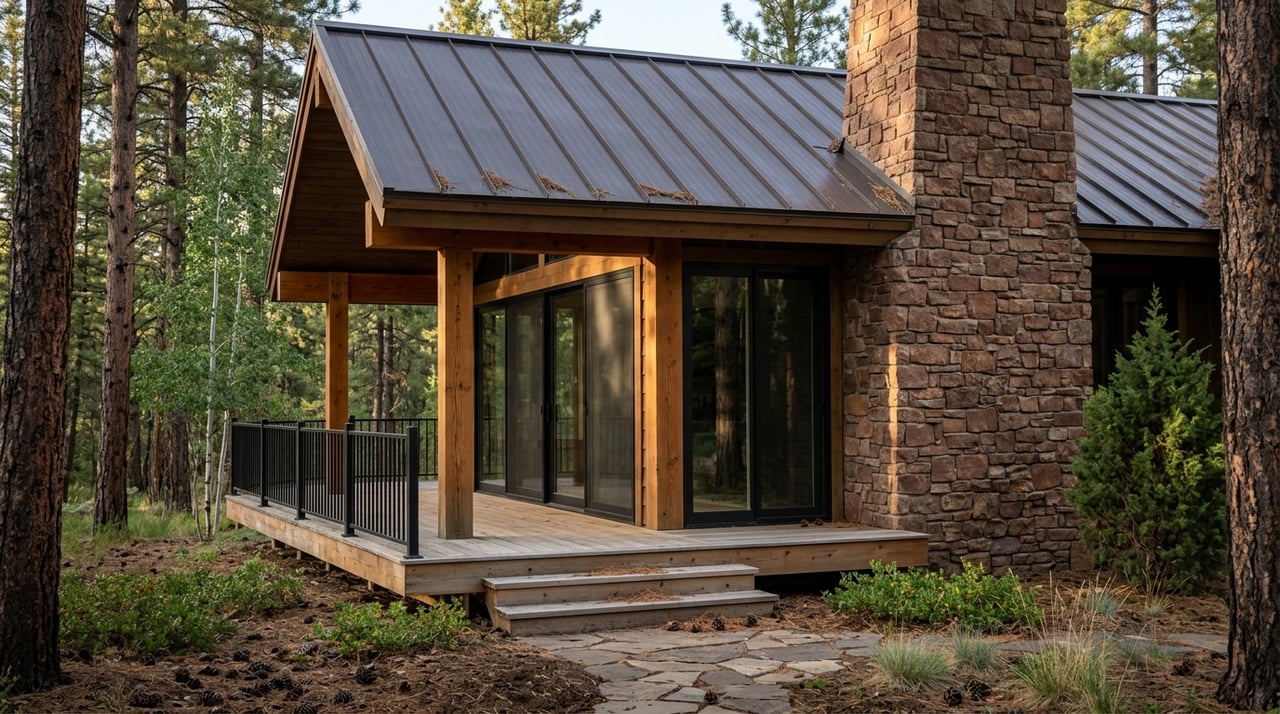
Dreaming of a quiet cabin tucked in the pines or a wide‑open estate with big Pikes Peak views? In Woodland Park, both options are on the table, and each brings a different kind of mountain life. You want clarity before you commit. This guide compares luxury cabins and custom estates in 80863 so you can weigh upkeep, access, utilities, wildfire planning, and resale with confidence. Let’s dive in.
Woodland Park at a glance
Set at roughly 8,465 feet, Woodland Park is known as the City Above the Clouds and serves as a gateway to Pikes Peak and Ute Pass. It sits about 17 to 30 miles west of downtown Colorado Springs via US‑24, commonly a 25 to 40 minute drive in good conditions (Woodland Park context). The city counted about 7,920 residents in the 2020 Census, and you can check updates in the latest Census QuickFacts (U.S. Census QuickFacts).
Market-wise, Realtor.com reports a median home price of about $538,600 in zip 80863 (as of January 2026). Prices vary widely by lot size, view, access, and utilities, so use this as a general starting point and review local MLS comps for your exact niche (Realtor.com 80863 market page). For a county‑level snapshot, you can also review the Colorado Association of REALTORS monthly report for Teller County to see trend lines at the time you shop (CAR Teller County report, Jan 2026).
Who thrives in a cabin
Everyday feel
A luxury cabin puts you closer to the trees and often closer to trailheads and in‑town amenities. Many cabins sit on smaller or mid‑size treed lots, where the appeal is the woodsy setting and retreat vibe. Listings in and around Woodland Park show a range from cozy, high‑finish cabins to larger lodge‑style homes (local cabin examples).
Upkeep and utilities
Cabins usually have less interior square footage to maintain, but exterior care can add up. Expect regular roof checks, wood protection if you have log or wood siding, and steady defensible‑space work to thin trees and remove ladder fuels. If your cabin is on a private well and septic, plan for water testing, pump maintenance, and septic service schedules through Teller County’s Environmental Health department (Teller County septic services).
Financing and insurance
If the cabin taps city water and sewer, financing tends to be straightforward. On well and septic, lenders and appraisers may require a recent well flow test, water‑quality reports, and a septic inspection to meet FHA/VA/Fannie/Freddie standards. FHA’s Handbook 4000.1 points to typical expectations like documented water quality and adequate well yield, often around 3 to 5 gallons per minute for existing wells, plus proper distances from the septic system (HUD 4000.1). Both cabins and estates in the wildland–urban interface should also expect wildfire‑related underwriting questions.
Resale and STR reality
Cabins trade well when they pair character with practical access and good maintenance. Historically, some buyers counted on short‑term rental income, but Woodland Park’s ordinances now require a short‑term rental business license and have limited STRs in residential zones to owner‑occupied units. The rules saw legal challenges and enforcement activity in 2024 and 2025. Confirm eligibility and current enforcement with the city before projecting income (as of publication, see the city’s STR FAQ) (Woodland Park STR FAQ).
Who thrives in an estate
Everyday feel
Custom estates on acreage often lean into space and views. You may get meadows, long driveways, and big panoramas of Pikes Peak. These properties suit full‑time living, room for vehicles and workshops, guest quarters, or equestrian uses where zoning and covenants allow.
Upkeep and utilities
More land means more to maintain. Budget for longer driveway plowing, landscaping or forest management, and care for any outbuildings or generators. Some estates sit outside city limits, using private wells and septic systems that require the same diligence on permits, inspection records, and maintenance scheduling through Teller County (Teller County septic services).
Financing and appraisal
Large acreage, unique construction, or off‑grid features can trigger specialty underwriting. Some lenders require higher down payments or won’t finance if access is limited or improvements are nonconforming. If the estate is on a well and septic, expect the same water‑quality, well‑yield, and septic verification that cabins encounter under FHA and other loan guidelines (HUD 4000.1).
Resale considerations
The buyer pool for estates is smaller but focused. When the lot, view, access, and amenities align with local preferences, values tend to track with higher‑net‑worth and relocation demand. Your resale story will lean on acreage, privacy, and use potential rather than nightly rental math.
Wildfire, access, and broadband
Wildfire planning
Most of Woodland Park and much of Teller County sits in the wildland–urban interface. Expect to evaluate defensible‑space needs, ember‑resistant features, and ongoing mitigation. The county’s Community Wildfire Protection Plan is a helpful reference for risk mapping and strategies, and it can connect you to local programs and potential grant opportunities (Teller County CWPP). Both cabins and estates benefit from trimmed vegetation, screened vents, and thoughtful siting that reduces fuel near the home.
Insurance carriers have focused more on wildfire risk statewide in recent years. Check with your insurer early about underwriting requirements and possible mitigation discounts. State regulatory changes in 2024 and 2025 influenced insurer filings and modeling practices, so a proactive review can prevent surprises at closing (regulatory context).
Winter access and plowing
Inside city limits, Woodland Park Public Works plows city roads, typically starting around a 4‑inch snowfall trigger with priority routes set by policy. State highways and many county roads are handled by CDOT or county crews. Private or HOA roads may not be plowed, so confirm the maintenance plan and your driveway equipment needs before you buy (city snow plow policy).
Broadband and cell coverage
In town, multiple providers offer fiber, cable, or fixed wireless, but coverage thins as you move to deep forest parcels or larger acreage. Some outlying addresses rely on fixed wireless or satellite solutions. Always check availability at the exact address before you hinge remote‑work needs on a property (broadband availability overview).
City vs. county permits and utilities
If your property is inside Woodland Park city limits, zoning applications run through the city’s Planning & Building Department, and building permits are typically routed to Pikes Peak Regional Building Department for reviews and inspections. Outside city limits, Teller County land‑use rules and county permitting apply. Always pull the permit history for additions, decks, garages, and outbuildings (city planning and forms).
For wells, the Colorado Division of Water Resources manages permits and well logs. Confirm the well permit type, pumping rate, recorded easements, and any shared‑well agreements. For septic systems, obtain the county OWTS permit, tank and drainfield documentation, maintenance records, and any repair history. These records help you and your lender avoid delays and give a clear picture of long‑term upkeep (Colorado DWR well resources; Teller County septic services).
Cabin vs. estate: quick comparison
- Privacy and setting
- Cabin: immersive tree cover, near town or trails, frequent mitigation.
- Estate: larger acreage and separation, big views, longer driveways.
- Upkeep and costs
- Cabin: smaller interior upkeep, steady exterior care, well/septic service if applicable.
- Estate: higher fixed costs for land, outbuildings, and plowing.
- Lifestyle fit
- Cabin: retreat vibe, lower space needs, easy trail access.
- Estate: room for vehicles, workshops, guests, or equestrian uses.
- Resale demand
- Cabin: strong with character and practical access; reevaluate STR assumptions under current city rules (city STR FAQ).
- Estate: depends on acreage, access, and views; buyer pool is focused but committed.
- Financing and appraisal
- Both: well and septic add lender conditions; verify early under FHA/VA/conventional rules (HUD 4000.1).
Your 80863 showing checklist
Bring this list to tours and request documents up front.
- Water and well
- Ask for the state well permit number, well log, recent pump test in gallons per minute, and any lab water‑quality results. Lenders often require third‑party testing within 90 days of closing (Colorado DWR well resources).
- Septic system
- Request the Teller County OWTS permit, last pump date, drainfield location, and any repair records (Teller County septic services).
- Access and snow
- Confirm if roads are public or private, who plows them, and whether the driveway is paved. City plows city routes around a 4‑inch trigger; private roads may not be serviced (city snow plow policy).
- Wildfire readiness
- Check the property’s CWPP context and ask about recent thinning, chipping, and defensible‑space work. Confirm any insurance mitigation discounts or requirements (Teller County CWPP).
- Permits and additions
- Pull permit history for additions and outbuildings; ask about any unpermitted work. City properties route permits through PPRBD (city planning and forms).
- Short‑term rental rules
- If you plan to rent, confirm eligibility, licensing, and enforcement status with the city before assuming income (Woodland Park STR FAQ).
- Utilities and broadband
- Verify wired internet and cellular coverage at the exact address. Remote parcels may need fixed wireless or satellite (broadband availability overview).
Common red flags include missing well permits, unknown well yield, visible septic issues, private roads without recorded maintenance agreements, unpermitted additions, and unclear STR eligibility.
How to choose your best fit
Ask yourself a few practical questions:
- Do you want a retreat feel near trails, or maximum space and privacy with room for hobbies and guests?
- How much time and budget can you set aside for exterior care, plowing, and mitigation each year?
- Will you rely on a specific loan type that requires well and septic verification?
- Do you need wired broadband for work, or are fixed wireless or satellite options acceptable?
- Is potential rental income important, and does the parcel qualify under current city STR rules?
If you match your lifestyle to the land, and verify access, utilities, and permits early, your Woodland Park purchase can deliver exactly the mountain life you want.
Ready to narrow your options and tour the right properties? Connect with Ruthie Grainger for grounded, local guidance on cabins, estates, and everything in between.
FAQs
What is the current median home price in 80863?
- Realtor.com reports a median home price of about $538,600 for zip 80863, based on data through January 2026; review local MLS comps for your property type (Realtor.com 80863).
Are short‑term rentals allowed in Woodland Park?
- The city requires a short‑term rental business license and has limited STRs in residential zones to owner‑occupied units, with legal challenges and enforcement activity in 2024–2025; verify status before planning income (city STR FAQ).
What should I know about wells and septic in Teller County?
- Many properties use private wells and septic; verify well permits and logs via the Colorado DWR and obtain septic permits and maintenance records from Teller County before you finalize lending and inspections (Colorado DWR; Teller County septic).
How is winter road access handled near Woodland Park?
- City roads are plowed by Public Works at about a 4‑inch trigger with priority routes; CDOT or the county handle many other roads, while private or HOA roads may require owner‑arranged plowing (city snow policy).
Can I get reliable internet on acreage around 80863?
- In town you often have fiber or cable, but farther out you may rely on fixed wireless or satellite; check exact address availability before you buy (broadband overview).
What wildfire steps should I budget for in Woodland Park?
- Plan for defensible‑space work, tree thinning, and ember‑resistant features; consult the county CWPP for local guidance and ask insurers about mitigation requirements and discounts (Teller County CWPP).
