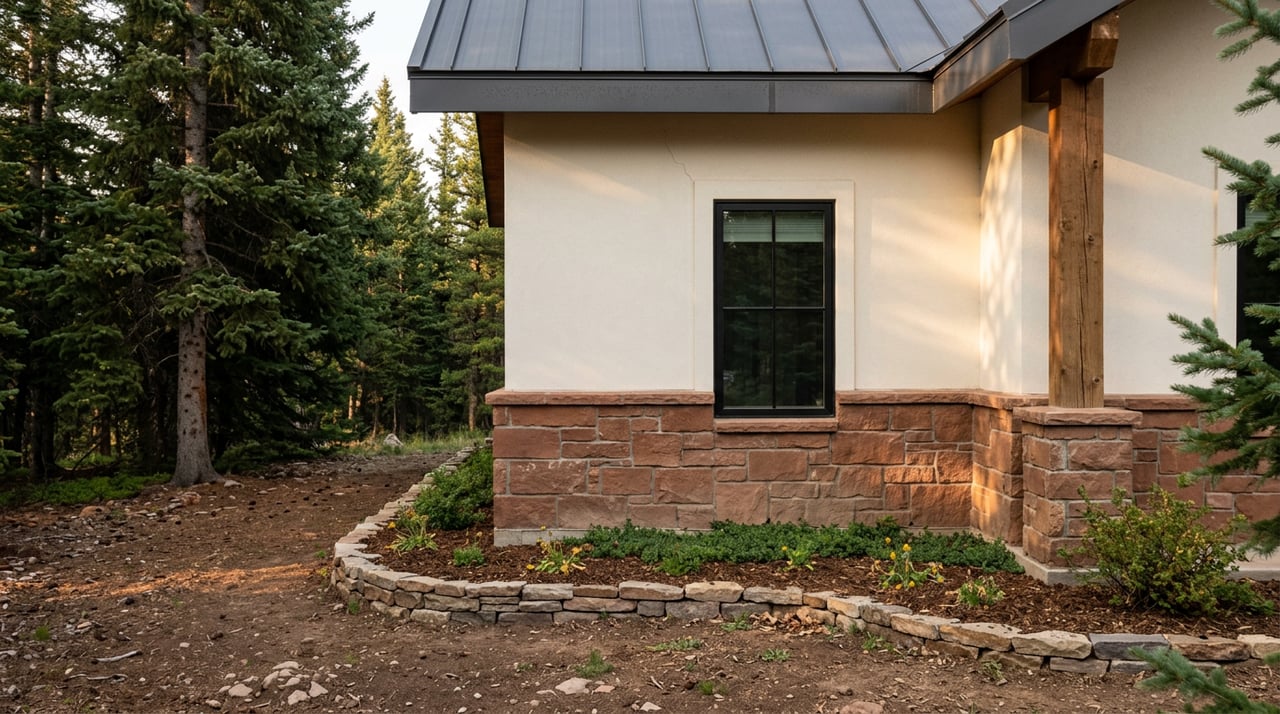
John and Linda Towner built their home off a dirt road outside Divide 28 years ago, the kind of place where you drive several miles past the highway turnoff before the trees close in around you. They never filed an insurance claim in nearly three decades. At their carrier's own request, they spent thousands of dollars clearing debris, cutting limbs, installing stucco, and putting on a metal roof. In the spring of 2025, Allstate sent them a non-renewal notice anyway. Linda Towner told a Colorado Springs television station, "We're scared to death. We're not sleeping at night."
That story matters to anyone buying or selling a large-lot property in Divide right now, because it upends the order most people worry about closing risk in. Buyers fixate on the well. Sellers fixate on the septic. Everyone assumes the road agreement is the paperwork nightmare. Those things are real, but they are all solvable with enough lead time and a checklist. Insurance is different. You can do everything a carrier asks and still lose the policy, and the law that just took effect in Colorado does not change that math. It only makes the number visible.
The Paperwork Problems Are the Easy Part
Start with the septic system, because it is the one piece of Divide real estate almost every buyer eventually deals with. Teller County requires a specific document called a Title Continuance Use permit whenever an existing onsite wastewater treatment system changes hands. The new owner has to apply for it within 60 days of closing, or the permit becomes invalid. Miss that window and you own a house with a septic system the county no longer recognizes as permitted. The office that processes this paperwork isn't in Colorado Springs or Cripple Creek. It's on Weaverville Road in Divide itself, which is a small detail but a useful one: this isn't a distant bureaucracy, it's a county office your closing coordinator can call the same week you sign.
The well works on a similar logic, just with a different agency. Most private wells drilled on properties smaller than 35 acres in Colorado are permitted for household use only, capped at 15 gallons per minute, with no outdoor watering allowed at all under that permit type, not for a garden, not for livestock, not for washing a truck in the driveway. That's the Colorado Division of Water Resources rule, not a local quirk, and it surprises a lot of people who assume owning five acres means owning unlimited water. If a property needs a new well permit rather than an existing one, the state's review window runs up to 49 days for a complete application, which is worth knowing before you write a 30-day closing into a contract.
Both of these are administrative. They take time, not luck. Build the timeline correctly and neither one derails a sale.
The Private Road Fork You Don't See Coming
Private roads are where paperwork starts to intersect with financing, and this is the first place a deal can actually die rather than just slow down. If a property's access runs over a shared private road, the type of loan a buyer is using determines whether that road needs a formal, recorded maintenance agreement before the lender will fund.
| Loan type | Recorded road maintenance agreement |
|---|---|
| Fannie Mae | Generally required, and a missing one can stop the loan outright |
| Freddie Mac | More flexible, often accepted without a formal recorded agreement |
| USDA | Evaluated case by case |
A cash buyer never runs into this. A buyer using a conventional loan sold to Fannie Mae can. That means the same private-road property might sail through one buyer's financing and stall completely for the next one, depending on which loan program they're using and which investor their lender sells to. Anyone selling a Divide property with shared access should know now, not during underwriting, whether a recorded agreement exists.
Hail Pays the Bills. Wildfire Ends the Policy.
Here's the part that surprises even people who think they understand the insurance problem in mountain Colorado. Statewide, hail, not wildfire, is the single biggest driver of rising homeowners insurance premiums. A state analysis released by the Division of Insurance and the Governor's office in February 2026 found that installing a fortified roof in El Paso County could save a homeowner roughly $388 a year on premiums. Wildfire mitigation, by contrast, barely moved the number. The same analysis found that clearing brush and creating defensible space would save the average Summit County homeowner about $25 a year. In Yuma County it was two dollars.
So the thing that costs the most on your bill and the thing that determines whether you have a bill at all are not the same thing. Wildfire mitigation rarely earns you a meaningfully lower premium. What it earns you, if you're in a wildland-urban interface zone like the forested acreage around Divide, is a shot at keeping the policy in the first place. The Towners didn't lose their coverage because their premium got too expensive. They lost it because their carrier decided it no longer wanted the exposure, full stop, regardless of what they'd spent on mitigation.
What Changes on July 1, and What Doesn't
Colorado's House Bill 25-1182 took effect on July 1, 2026, and it's the most direct legislative response yet to stories like the Towners'. For the first time, any insurer using a wildfire risk model to price, non-renew, or decline a policy has to hand the homeowner a written score, explain what's driving it, and accept a formal appeal if the homeowner believes it's wrong. Insurers now also have to factor documented mitigation work, cleared brush, ember-resistant vents, a Class A roof, into that pricing rather than ignoring it.
What the law does not do is force any insurer to write a policy it doesn't want to write. A homeowner with a perfect wildfire score can still be told no. That gap is exactly why the Colorado FAIR Plan exists as a backstop: it's the state's insurer of last resort, capped at $750,000 in actual cash value coverage rather than full replacement cost, which is a real shortfall for a custom mountain home that would cost more than that to rebuild. As of July 2026, the FAIR Plan covered hundreds of properties across 39 Colorado counties, insuring roughly $144 million in total value, and it exists precisely because the standard market has walked away from properties like the ones scattered across Teller County.
None of this means insurance is unavailable in Divide. It means the timeline for sorting it out has to move earlier in the transaction, not later.
What This Means If You're Buying or Selling in Divide This Year
If you're selling, get ahead of the insurance conversation before you list. Pull your own wildfire risk score now that carriers are required to share it, and if you've done mitigation work, have the receipts, photos, and dates ready. A documented history of no non-renewals and no lapses in coverage is now a legitimate selling point, not a footnote.
If you're buying, ask about the current owner's insurance situation before you write an offer, not after inspection. Has the policy ever been non-renewed? Is the seller currently on the FAIR Plan? What did their last renewal actually cost? A property that pencils out at one premium can look very different at another, and a lender won't fund without proof of insurance in hand.
For everyone, a short list worth running through during due diligence:
- Confirm whether the property's septic system will need a Title Continuance Use permit, and start that application the day title transfers, not 59 days later
- Check whether the well is exempt and household-only, and understand what that means for outdoor water use before you plan any landscaping or livestock
- If access runs over a private road, ask for the recorded maintenance agreement before you commit to a loan program
- Get a written wildfire risk score from a prospective insurer before closing, not after
The paperwork on a Divide property is manageable. The insurance question is the one that can move the goalposts after everyone thought the deal was done, and it deserves to be asked first, not last.
We've walked ranch families and remote-property buyers through exactly this sequence for years, because we live where these rules apply. If you're weighing a purchase or getting a large-lot property ready to sell, Gold District Realty can walk the parcel, the paperwork, and the insurance picture with you before you're locked into a contract. Get an Instant Property Valuation to start the conversation.
A Few Questions Worth Asking Early
Do all properties around Divide rely on private wells and septic systems? Not every one, but a large share of the acreage outside town water and sewer service does, which is why Teller County's septic permitting and the state's well rules come up in nearly every rural transaction out there.
If wildfire mitigation barely lowers my premium, is it still worth doing? Yes, for a different reason than saving money. Under HB25-1182, documented mitigation is now the basis for a formal appeal if your risk score is wrong, and it can be the difference between renewal and non-renewal even when it doesn't move your bill much.
What happens if I can't find coverage before my closing date? The Colorado FAIR Plan will offer coverage after standard carriers decline, but it's actual cash value only and capped at $750,000, so it should be treated as a bridge while you keep working the private market, not a permanent answer.
