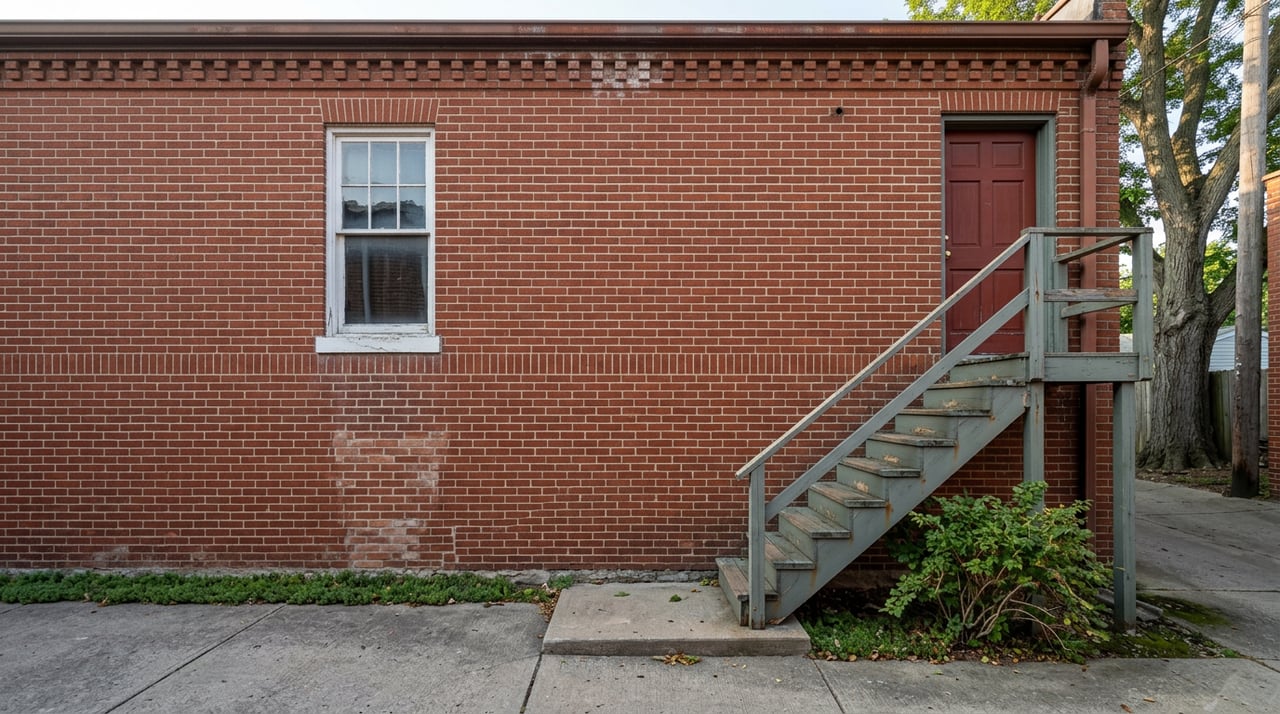
Steve Parks and his wife were vacationing from Florida when they found the building. An empty storefront on Cañon City's Main Street, ground floor retail, apartments upstairs, the kind of listing that looks irresistible in photos and terrifying in a contractor's estimate. Parks could cover the purchase price and the remodel. What nearly killed the deal was the gap between what the building was and what current fire and accessibility code required it to be. He has said the numbers only worked once the city stepped in with a grant, and that the closing happened the day after the award came through.
That story is worth more than a passing mention because it points to the thing most out-of-town buyers get backward about Cañon City's downtown. They assume the risk sits in the historic designation itself, that owning a building inside a National Register district means a preservation board will second-guess every window replacement. It doesn't work that way here. The risk sits somewhere far more mundane and far more expensive: bringing a building built for 1900s foot traffic up to the fire suppression and accessibility standards that apply to it today. If you're looking at property in this district, that's the distinction that decides whether your deal closes or dies at inspection.
What "historic district" actually restricts
Cañon City's Downtown Historic District covers 81 buildings, most of them strung along Main Street, built between 1870 and 1930 during the town's run as a regional trading center. It's been on the National Register since 1983, and locals will tell you it's the longest stretch of historic Main Street anywhere in Colorado.
Here's the part that surprises buyers coming from cities with stricter preservation ordinances: inclusion in the National or State Register does not, by itself, restrict what a private owner can do to a building. History Colorado is explicit about this. Owners can alter or demolish a listed property, subject only to whatever the local jurisdiction requires through its own permitting process. The register status is a recognition, not a lien on your renovation plans. It matters for eligibility, tax credit programs and how the city thinks about the corridor as a whole, but it isn't the design-review gauntlet people expect.
Where that changes is if a specific building has been separately designated a local landmark, which is a narrower, individual status that does trigger design review in the communities that use it. Before you write an offer on anything in this district, it's worth a direct call to Cañon City's Historic Preservation Commission, which meets the fourth Wednesday of each month at City Hall on Main Street, to confirm whether your particular address carries that individual designation or simply sits inside the broader register boundary. Those are two very different due diligence conversations, and conflating them is how buyers waste weeks worrying about a restriction that doesn't apply to their building.
The number that actually decides the deal
Once you clear that question, the real math starts. Century-old commercial buildings on Main Street were not built with sprinkler systems, ADA-compliant entries, or modern electrical loads in mind. Retrofitting one to meet current building and fire code is the kind of expense that can turn an attractive purchase price into a project that doesn't pencil out, which is exactly what almost happened to Parks.
The city built a mechanism specifically for this gap. Through the Cañon City Area for Reinvestment Expansion, known locally as C-CARE, the Downtown Life Safety and Accessibility Grant Program reimburses up to 75 percent of qualifying costs for fire suppression, safety code work and ADA accessibility improvements, capped at $50,000 per property. A companion program under the same C-CARE umbrella covers building systems, HVAC, plumbing, electrical and weatherization, again at a 75 percent match, capped at $25,000. Both are reimbursement grants tied to older and historic buildings specifically, and the city absorbed them into their current form back in 2021, expanding them again the following year.
| Grant | Covers | Match rate | Maximum award |
|---|---|---|---|
| Downtown Life Safety and Accessibility Grant | Fire suppression, safety code compliance, ADA accessibility | Up to 75% | $50,000 per property |
| Building Systems Grant | HVAC, plumbing, electrical, weatherization | Up to 75% | $25,000 per property |
That's real money against a real problem, and it's the reason the city's Economic Development Department has framed the grants as a way to hedge a buyer's investment rather than as a bureaucratic courtesy. For a buyer running the numbers on an older Main Street building, whether that gap can be closed with a C-CARE award, and how long the application and reimbursement timeline runs relative to your closing date, is a more consequential question than anything related to preservation review.
What downtown reinvestment actually looks like right now
This isn't theoretical policy sitting unused on a city webpage. The renovation of the historic Fremont County National Bank building on Main Street was substantially completed with this kind of support and went on to win the Governor's Award for Downtown Excellence in the "Place" category from Downtown Colorado Inc. That's the kind of outcome the grant programs were built to produce: a building that would have been too expensive to bring up to code on private capital alone, finished and generating tax revenue instead of sitting vacant.
The corridor itself has been through a period of visible disruption in service of that same goal. In 2025 the city undertook roughly $2.5 million in Main Street improvements at the west end of downtown, funded through voter-approved city road taxes and a Colorado Department of Transportation revitalization grant, part of an upgrade effort that traces back to work on the Fifth Street intersection in 2014. Businesses along the corridor, including Boudreauxs BBQ, DiRito's Italian Restaurant, McCasland Glass and Driftwood and Clay, absorbed months of construction-related disruption while that work wrapped up. The city has also talked about converting a surface parking lot near the old clock tower at Third and Main into a public plaza with a stage and shade structures, part of a broader effort to connect the downtown to the Royal Gorge Route Railroad depot, the Arkansas Riverwalk and the whitewater park area.
None of that construction history is a reason to avoid buying downtown. It's context for why the city has money and motivation tied up in exactly the kind of code-compliance gap that almost sank Parks's purchase. A jurisdiction that just spent multiple years and millions of dollars trying to make its historic Main Street more viable has an incentive to keep the buildings along it occupied and up to code, and the grant programs are the tool it built to do that.
Before you write an offer
If you're seriously looking at a building in this district, the due diligence list looks different from a typical single-family purchase. Confirm whether the property carries individual local landmark status or sits inside the broader National Register boundary only, since only the former triggers design review. Get a contractor's estimate on fire suppression and ADA compliance work before you finalize your offer price, not after. Ask directly whether the building qualifies for either C-CARE grant, and build the application timeline into your closing schedule rather than treating it as a nice-to-have that surfaces after you've already signed. Reimbursement grants require you to spend the money first in most cases, which changes how you sequence financing.
The historic label on a Main Street building is a marketing asset, not a legal obstacle. The code-compliance gap underneath it is the actual negotiation, and it's one where the city has already built the tool to help close it. Buyers who understand that distinction going in are the ones who end up closing, like Parks did, the day after the paperwork clears.
If you're evaluating a downtown Cañon City property or anywhere else along the Pikes Peak corridor, Gold District Realty can walk through what a specific building's history, zoning and grant eligibility actually mean for your offer. Get an Instant Property Valuation to start the conversation.
