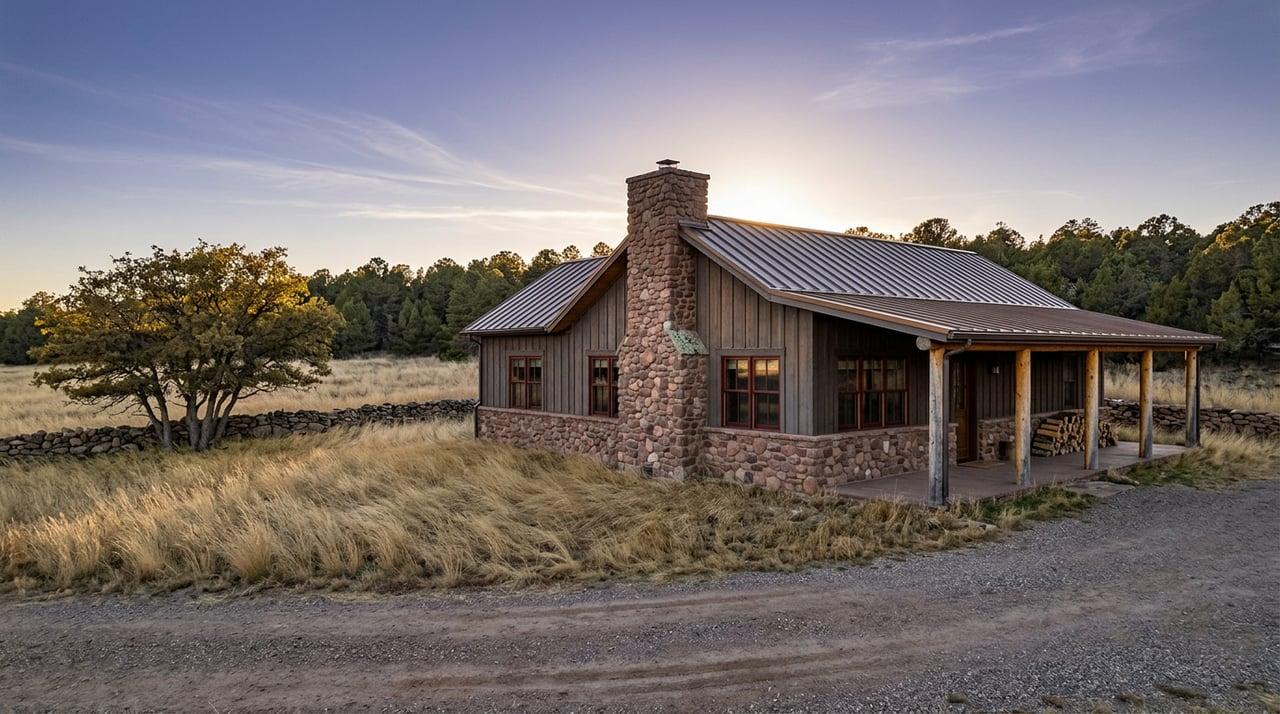
"It's an honor, a challenge, a dream come true. The Apple Shed already means something to this community." That's how the family behind Penrose's most recognizable roadside landmark described the months of work leading up to October 3, when the doors of the Apple Shed open again after more than twenty years shut behind a wire fence.
If you've driven Highway 115 through Penrose any time in the last two decades, you know the building even if you've never been inside it. It's the one with the giant rocking chair out front, the hand-hewn Douglas fir monster built in 1990 to claim the title of World's Largest Rocking Chair. Other towns have since built bigger chairs, so the title has moved on, but the chair never did. It has spent twenty years as a landmark for a business that wasn't there anymore, visible through a fence to anyone passing on 115 but locked to everyone else. This fall that changes, and the reason it's changing on this particular date matters more than the reopening itself.
Six Businesses, One Building
The Apple Shed at 708 Fremont Street was raised in the early 1910s, and depending on which local account you read, either 1912 or 1913. Either way, it started as a cannery, tied to the same fruit economy that still shapes this stretch of the Arkansas River Valley. From there it kept changing jobs without ever changing buildings. It became an apple cider distillery, then a winery. At some point it spent thirty years as the home of Don Ward Transport, formerly Don Ward Trucking, a stretch of its history that has nothing to do with apples at all. It hosted weddings. It ran for years as the cafe and mercantile most longtime residents actually remember, the version with the chair out front pulling in road-trippers off 115. When that business closed and sat empty, local schools used the open floor for basketball practice.
Six identities in a little over a century is not a preservation story about one use being protected. It's the opposite. The building survived by being willing to become almost anything, and the thread connecting cannery to cider mill to trucking depot to wedding hall was never the product. It was the building's position on 115 and the fact that nobody, across a hundred years of Penrose commerce, wanted to be the one to tear it down.
The Chair Outlasted the Business That Made It Famous
By the mid 2000s, the cafe and mercantile version of the Apple Shed had run its course. The owners retired, closed up, and the property went behind a fence. Road trip blogs and roadside attraction sites kept photographing the chair through that fence for the next two decades, describing a business that no longer existed behind a landmark that wouldn't leave. That's a strange kind of local fame. The chair became more recognizable than any single business that ever operated in front of it, which is part of why its return matters more to people who live here than a typical restaurant opening would.
The Almost-Loss
At one point the property went up for sale, and the interest that came back wasn't the kind that saves a landmark. A trucking company wanted the site for exactly the kind of use the building had once already served, but this time the plan involved tearing out the front so trucks could back straight up into it. The owner at the time, Sam Banning, said no. In his words, they looked at that plan and decided they couldn't let it happen.
Instead the property stayed in the family. Sam and his son Cooper Banning have spent roughly the last three years working on it, adding more than 2,000 square feet of living space, replacing the electric and plumbing systems, and rebuilding the kitchen, all while keeping the original wooden beams that mark the building as a structure from another era. It's a renovation built around keeping what made the place recognizable rather than starting over, which is consistent with a building that has already reinvented itself six times without losing its silhouette once.
Why October 3 Isn't Random
The date matters because Penrose isn't picking a random fall Saturday to reopen a restaurant. October 3 is also the date of the town's 92nd annual Apple Day Festival, which puts the festival's first year around 1935. The Apple Shed building is actually older than that tradition by about two decades. It was already standing on 115 as a working cannery, processing the same valley's fruit crop, before Penrose ever organized a festival around it. Timing the grand opening to land on the festival weekend isn't coincidence. It's the building's owners choosing to reenter Penrose's calendar on the one day the town already gathers to celebrate the crop this building was originally built to process, decades after the building beat the festival to town.
What's actually opening isn't a restoration of any one of the building's six previous lives. According to reporting on the reopening, the plans include a restaurant, a bar, a mercantile space, and room for special events, which reads less like a return to the old apple cafe and more like an attempt to give the building enough different functions that it can absorb whatever Penrose needs from it next, the same pattern that's kept it standing since the 1910s.
What Changes for Apple Day This Year
If you've been to Apple Day in past years, you know the rhythm. The festival happens, and somewhere along the drive to or from it, you pass the fenced-off building with the big chair, the one that's been a fixture of the route without ever being a stop on it. This year that changes for the first time in most residents' memory of the event. The chair that's been visible only through wire fencing for two decades will have an open, lit building behind it on the same day the whole town is already out celebrating apples.
That's a small shift, but it's the kind that changes how a familiar tradition feels without changing what the tradition is. Longtime residents who've driven past that fence for twenty Apple Days are about to have a different answer to the question of what's actually happening at the Apple Shed this year, and it's worth knowing before the weekend arrives rather than discovering it in traffic on 115.
Penrose keeps proving that its landmarks don't disappear so much as wait for someone willing to reopen them. If a piece of the town's history and future like this one has you thinking more broadly about what's happening in the neighborhood you call home, Gold District Realty has spent years tracking exactly these kinds of local shifts across Penrose and the rest of the Pikes Peak corridor. Reach out any time you want a local read on what's changing here, whether it's a landmark reopening or the market around it.
