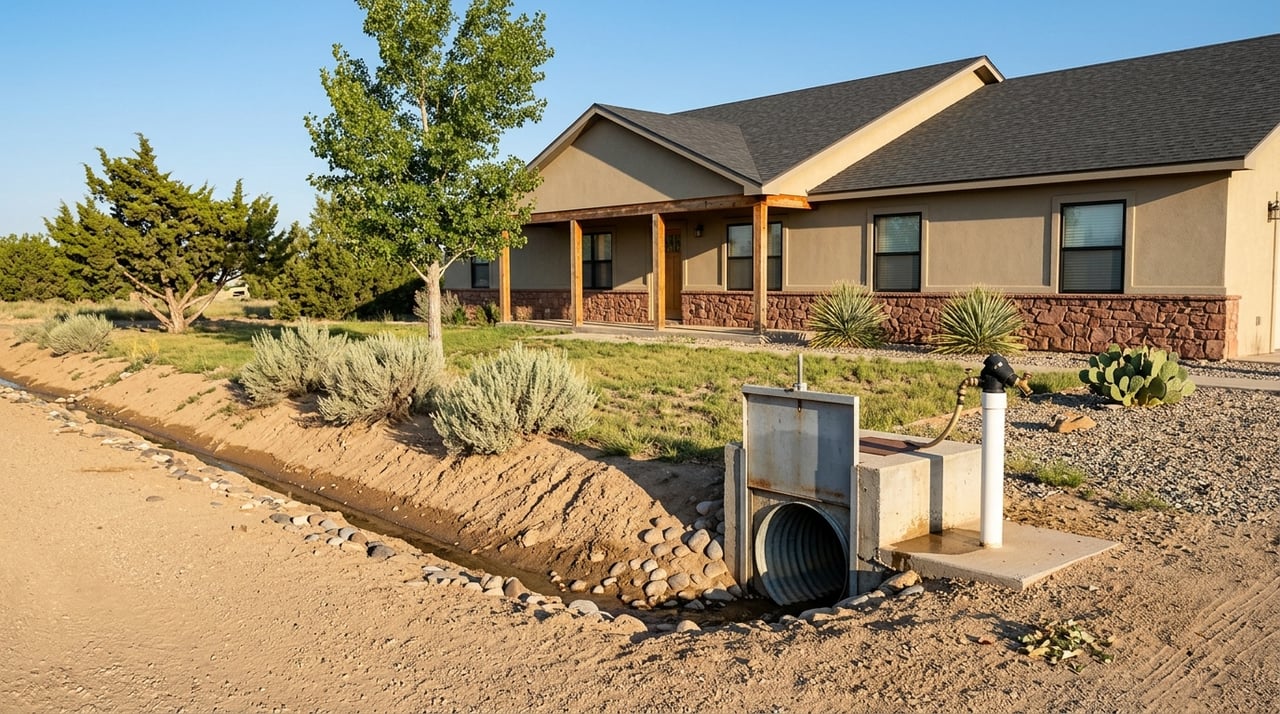
Buying land in Penrose can feel simple at first glance. You see open space, a home site, maybe a few trees, and room to spread out. But in this part of Fremont County, the real story often comes down to water, access, zoning, and what the parcel can legally do. If you are thinking about buying acreage or a rural home here, this guide will help you ask better questions before you commit. Let’s dive in.
Why Penrose properties feel different
Penrose is not a typical suburban market. Fremont County describes the Penrose/Beaver Park District as a large unincorporated rural area that was originally platted in the early 1900s by the Beaver Land and Irrigation Company.
That history still shapes what you see today. The county says the district covers about 69,000 acres, was originally divided into lots averaging 9.25 acres, and now includes a mix of residential use along with hobby and production agriculture. In practical terms, many Penrose listings behave more like small-acreage rural properties than standard neighborhood homes.
Because most of Penrose is unincorporated, land-use questions usually go through Fremont County Planning and Zoning, not a city planning office. The county also provides a GIS zoning viewer, which is an important tool for checking parcel-level zoning before you assume a lot can be built on or used in a certain way.
Start with water, not the house
In Penrose, water is often the first thing you should understand. A pretty property can look straightforward, but the value and usefulness of that property may depend heavily on where the water comes from and what rights or permits go with it.
Fremont County’s master plan says residential water is available from the Penrose Water District to most of the platted Penrose/Beaver Park area. It also says irrigation water for agricultural uses is available in most of the area from Beaver Park Water Company. Parcels outside those service areas may rely on onsite wells.
That means two nearby properties can operate very differently. One may have a residential water source plus irrigation delivery, while another may depend entirely on a private well with very specific legal limits.
Understand what “water” really means
In Colorado, water is not always a simple utility service. Colorado State University Extension explains that water rights are rights to use water, not ownership of the water itself.
That matters because a listing that mentions irrigation water may not mean the same thing as a listing with a municipal tap or a private domestic well. Depending on the parcel, water delivery may be tied to the land, to shares, or to a contract entitlement. You should verify exactly what transfers with the property instead of relying on general wording in a listing.
Irrigation can change year to year
If you are buying acreage for pasture, gardening, or small-scale agricultural use, irrigation details deserve close attention. CSU Extension notes that surface-water systems often rely on reservoirs, ditches, and ditch riders, and the actual amount delivered can depend on snowpack and spring runoff.
For you as a buyer, that can affect everyday use. It may shape when fields can be watered, how much water is available, and whether you need to coordinate directly with a ditch rider or water company.
Beaver Park irrigation questions to ask
Local company information describes Beaver Park Water as a shareholder-based irrigation system with lease and pump-permit rules. That means you should not assume irrigation use automatically comes with the land just because water is mentioned.
Ask clear, direct questions such as:
- Is the irrigation entitlement tied to the land or to a shareholder account?
- Are there any lease arrangements in place?
- Are there pump-permit rules that affect how water can be used?
- What paperwork shows what will convey at closing?
What to know about private wells
If a Penrose parcel depends on a private well, the well should be treated as both a physical water source and a legal use with rules attached. The Colorado Division of Water Resources issues well permits and keeps permit files.
According to DWR, a permit file may include the allowable uses, the original application, and available well construction and pump records. DWR also says it cannot guarantee a permit will be issued until a full evaluation is completed, which is important if you are buying vacant land and hoping to add a new well later.
Well permits can limit use
CSU Extension explains that many private domestic wells in Colorado are treated as exempt from the priority system, while irrigation-related groundwater uses are handled differently. For a buyer, the practical takeaway is simple: a well permit may allow some uses and restrict others.
So if you picture outdoor watering, animals, a garden, or future changes to the property, you need to confirm that the permit supports those plans. A well is not just “there” or “not there.” The paperwork matters.
Well water quality is your responsibility
Water quality is a separate issue from legal water use. The Colorado Department of Public Health and Environment says private wells are not regulated under the Safe Drinking Water Act, which means the owner is responsible for water quality.
CDPHE recommends testing private well water, and CSU Extension says the only reliable way to judge whether a private well is suitable for drinking is laboratory analysis for bacteria and chemical constituents. If you are under contract on a well property, recent testing should be part of your due diligence.
Sewer and septic are parcel-specific
Water supply is only half the story. Fremont County’s master plan says sanitary sewer service is limited to the eastern portion of town within the Penrose Sanitation District. In many other areas, septic or other onsite wastewater systems are common.
That is why septic questions should be asked early, especially on vacant land or older rural homes. A parcel may look usable on paper, but wastewater planning can still be a major factor.
Septic approval is not automatic
CDPHE says onsite wastewater treatment systems serving 2,000 gallons per day or less are permitted by local counties. Fremont County handles OWTS applications, contractor licensing, visual inspections, and homeowner guidance.
For buyers, that means septic feasibility is tied to the specific parcel. It is not just about whether a house currently exists. You will want to confirm whether the system was permitted, inspected, and sized for the intended use.
Access and roads matter more than many buyers expect
Rural access can be one of the biggest surprises for first-time acreage buyers. Fremont County says a driveway access permit is required for county access work, and the county Department of Transportation handles roadway and drainage structure maintenance in county rights-of-way.
The county also notes that many rural properties are served by private or public roads maintained by private road associations, and some county roads are not maintained by the county at all. So even if a property appears easy to reach, you still need to understand who maintains the road and what that means in practice.
A visible road is not the same as legal access
Fremont County’s Code of the West gives an important warning: having a drive to a property does not guarantee legal or all-weather access. That is one of the most useful reminders for buyers looking at rural land.
Before you move forward, confirm the legal access route, ask whether any road agreement applies, and find out whether a driveway permit is needed. These details can affect financing, usability, and long-term ownership costs.
Do not assume every parcel is buildable
A tax parcel on a map is not always the same as a legal lot for building purposes. Fremont County specifically cautions that not all tax parcels are legal lots for building.
That means you should not assume a parcel can automatically support a house, driveway, septic system, or future split just because it appears in a listing or on a county map. This is one of the most important reality checks for land buyers in Penrose.
Check zoning and parcel status early
Because parcel-level questions are handled through Fremont County, the county GIS zoning viewer is a smart place to start. Compare what the county records show against what the seller or marketing remarks suggest.
If you are thinking about future subdivision or added density, water supply review also matters. DWR says counties refer subdivision and related land-use proposals for water-supply review, and Fremont County’s master plan discourages further subdivision without access to public water.
A simple checklist for Penrose buyers
When you evaluate a Penrose property, keep your questions practical and specific. A strong rural purchase starts with clarity, not assumptions.
Here are some of the best questions to ask:
- Is the property served by Penrose Water District, Beaver Park irrigation, a private well, or some combination?
- What exactly conveys with the sale: a municipal tap, irrigation shares, a lease arrangement, or a well permit?
- If there is a well, what uses does the permit allow?
- Has the well water been tested recently for bacteria and chemicals?
- Is sewer available, or will the property rely on septic?
- Has the septic system been permitted, inspected, and sized for the intended use?
- What is the legal access route to the property?
- Who maintains the road, and is it county-maintained or privately maintained?
- Does the parcel’s zoning match the advertised use?
- Is the parcel actually buildable under current county rules?
- If you may subdivide later, what water-supply review or public-water expectations apply?
Why local guidance helps on Penrose acreage
Buying land or a rural home in Penrose is often less about the view and more about the fine print behind the view. Water source, irrigation rights, legal access, septic feasibility, and zoning can all shape whether a property truly fits your goals.
That does not mean Penrose is complicated in a bad way. It means you need a careful, local, property-by-property approach. When you understand the basics upfront, you can shop with more confidence and avoid expensive surprises later.
If you are looking at Penrose acreage, a rural home, or a land purchase in Fremont County, Ruthie Grainger can help you sort through the practical details and take a grounded, boots-on-the-ground approach to your search.
FAQs
What makes Penrose land different from other homesites in Fremont County?
- Penrose includes a large unincorporated rural area with a history of small-acreage parcels, mixed residential use, and agricultural water systems, so many properties function more like acreage tracts than standard subdivision lots.
What should buyers verify about water on a Penrose property?
- You should confirm whether the property has service from Penrose Water District, irrigation through Beaver Park Water Company, a private well, or another arrangement, and verify exactly what legally conveys with the sale.
What should buyers know about private wells in Penrose?
- A private well is subject to permit rules that may limit allowed uses, and the owner is responsible for water quality, so permit records and recent lab testing both matter.
What should buyers know about septic systems in Penrose?
- Many Penrose properties outside the limited sewer service area rely on onsite wastewater systems, so you should confirm whether the septic system was properly permitted, inspected, and sized for the intended use.
What should buyers know about road access in rural Penrose?
- A visible driveway or road does not always guarantee legal or all-weather access, so buyers should verify the legal access route, maintenance responsibility, and whether any driveway permit or road agreement applies.
What should buyers know about buildability in Penrose?
- Not every mapped tax parcel is a legal buildable lot, so buyers should confirm zoning, parcel status, and county requirements before assuming a property can support a house or future subdivision.
